
Short answer: yes. MetaMask is as safe as any well-audited, non-custodial wallet, and in 2026 it's still one of the most widely used on Ethereum. Nobody has ever broken its key system, and no incident has drained users' wallets. But "safe" doesn't mean "forgiving." With MetaMask you hold the keys, which means you also hold all the responsibility. The most common way people lose crypto here isn't a hack. It's losing their own access, or handing it to a scammer without realizing it.
That's the honest version. This review covers how MetaMask protects you, whether it's ever been hacked, the risks that are real versus the ones that make headlines, and what to do if you're already locked out or think you've been scammed.
What is MetaMask?
MetaMask is a non-custodial software wallet built by Consensys, the company Ethereum co-founder Joseph Lubin started back in 2014. (In September 2026, Consensys Software announced it was renaming itself MetaMask and spinning its protocol business off as a separate company.) The wallet itself launched in 2016 and has become the default wallet for Ethereum and the wider EVM world.
It runs as a browser extension (Chrome, Firefox, Brave, Edge) and as a mobile app for iOS and Android. Originally it was Ethereum-only, but through 2025 it added native Solana and Bitcoin support, so a single wallet now spans EVM chains, Solana, and Bitcoin. "Non-custodial" is the important word: MetaMask never holds your funds or your keys. You do. One exception to know about: if you set up your wallet by signing in with Google or Apple, MetaMask stores an encrypted backup of your Secret Recovery Phrase on its servers, and your password is what protects it.
How MetaMask protects your crypto
Your keys live on your device, encrypted. MetaMask stores your Secret Recovery Phrase and private keys in an encrypted "vault" on the device where it's installed. On the browser extension, your password is stretched with PBKDF2 (SHA-256) and used to encrypt the vault with AES-256-GCM. Nothing readable leaves your machine. Consensys can't see your keys, which also means they can't reset your password or recover your wallet for you.
It's transparent about how your keys are encrypted. MetaMask's vault encryption is documented and independently reviewable rather than a black box, so security researchers can confirm how it protects your keys. (There is an official tool for decrypting your own vault, but that's a last-resort recovery step, not something to do for fun. Only ever use the official tool, and never paste your vault or password into a site someone sends you.)
Biometrics and hardware wallets. The mobile app supports Face ID and fingerprint unlock layered over your phone's secure keychain. On the extension, you can pair a Ledger or Trezor hardware wallet; the mobile app supports Ledger and a few QR-code hardware wallets. Either way, your keys stay off the internet entirely. If you're holding a meaningful amount, this is the single biggest upgrade you can make.
It's audited, and it pays hackers to find holes. MetaMask has been reviewed by well-known security firms including Cure53 and Least Authority (whose 2019 audit of the mobile app found no critical vulnerabilities threatening stored value), among others across its Snaps and delegation systems. It also runs an active HackerOne bug bounty, so researchers have a financial reason to report flaws instead of exploiting them.
One caveat on "open source." You'll see MetaMask called open source. It's more precise to say the code is public on GitHub but the core client ships under a custom, source-available license rather than a fully permissive one. The underlying cryptography libraries are permissively licensed. Either way, the code is public and heavily scrutinized.
Has MetaMask ever been hacked?
This is the question everyone actually wants answered, so here it is plainly: no one has ever broken the encryption that protects MetaMask wallets. Because MetaMask never holds your keys, there's no central vault of user funds for an attacker to crack. That's the whole point of self-custody.
Four incidents come up, and each is narrower than the headlines suggest:
- The "Demonic" vulnerability (CVE-2022-32969), disclosed June 2022. Security firm Halborn found that a browser's "Restore Session" feature could save a Secret Recovery Phrase to disk in plain text if the phrase had been shown on screen during import. It required physical or remote access to an unencrypted computer, it also affected other browser wallets, including Phantom, and MetaMask patched it in version 10.11.3. A real flaw, responsibly disclosed and fixed.
- A 2023 support-vendor data incident. A third-party customer-support provider was accessed by an unauthorized party, exposing email addresses and support-ticket contents for roughly 7,000 people who had contacted support. Consensys stated the extension and mobile app were not affected. This was a privacy incident rather than a wallet breach: no keys, no funds.
- A 2026 contractor access story. Consensys disclosed that a North Korea-linked contractor, onboarded through a third-party vendor, had about a month of access to MetaMask code before being cut off, and it paused releases while it reviewed. By Consensys's own account, no user assets or data were misappropriated and no malicious code shipped. It's a supply-chain risk story worth watching, not a confirmed exploit of your wallet.
- A security incident disclosed September 30, 2026. MetaMask reported an ongoing incident affecting part of its infrastructure. Its one concrete step was precautionary: it exited the affected Ethereum validators in its non-custodial staking business, noting that it doesn't hold stakers' withdrawal keys. In its October 1 update, MetaMask said its investigation so far had found no indication that wallets or customer funds were affected, but the investigation was still open, and it hadn't said what was accessed. For most users, the more immediate risk is scammers using the news to send fake "security update" messages.
Notice the pattern: none of these drained user wallets, and none broke the encryption protecting your keys.
Your biggest risk isn't a hack. It's losing your own access
The people who lose crypto with MetaMask almost never lose it to a MetaMask hack. They lose it one of two ways.
The first is losing their own access: forgetting the password to a wallet whose Secret Recovery Phrase they never wrote down, wiping a device, or saving the phrase somewhere they can no longer find. Self-custody has no "forgot password" email. If the password and the phrase are both gone, the encrypted vault is the only door left, so don't reset, reinstall, or clear MetaMask before getting advice.
The second is being tricked into giving access away: approving a malicious transaction, connecting your wallet to a fake DeFi site, or typing a recovery phrase into a convincing lookalike.
If you're in the first situation right now (you still have the wallet, or the encrypted vault file, but you're locked out because you've forgotten the password), that's not necessarily the end. That encrypted vault is exactly what our work is built around. Crypto Asset Recovery uses secure, offline password-cracking to recover access to MetaMask vaults when you still have the encrypted file but have lost the password. We work from the vault data and your best password guesses. You only pay if we succeed.
If you've lost the recovery phrase itself, or you have only a partial phrase or a few words out of order, that's a different route. Read our guide on the MetaMask recovery phrase and our post on a missing word in your seed phrase.
MetaMask scams to watch for
If someone loses money "on MetaMask," a scam is usually what happened. These are the patterns we see over and over:
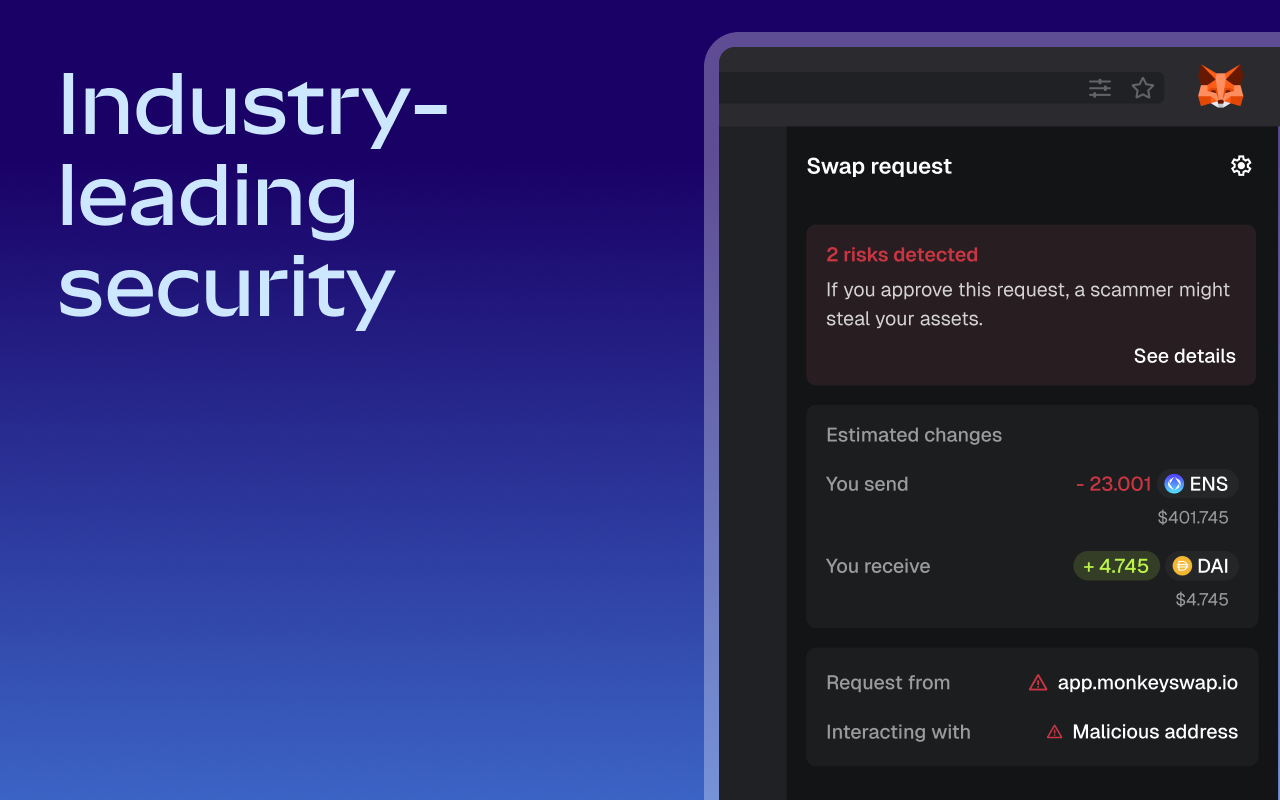
- Seed-phrase phishing. Fake sites and emails ask you to "verify," "validate," or "sync" your wallet by entering your 12-word phrase. MetaMask will never ask for it. Anyone who does is stealing it. Typing your Secret Recovery Phrase into a website is the single most common way people get drained.
- Fake support. Impersonators on X, Discord, Telegram, and search ads offer to "help" and then ask for your phrase or a screen share. Real MetaMask support lives at support.metamask.io and will never DM you first.
- Malicious token approvals. A dApp or airdrop page gets you to sign an
approveorsetApprovalForAlltransaction that hands a stranger's contract permission to move your tokens. The theft can happen days later. Review and revoke approvals you don't recognize. - Wallet-drainer sites and fake airdrops. A "claim your reward" page prompts one draining signature and your wallet empties in seconds. Drainers stole roughly $494 million from around 332,000 wallets in 2024 alone, according to Scam Sniffer. MetaMask is a frequent target for impersonation, from drainer sites to fake browser extensions.
- Fake extensions and lookalike domains. Counterfeit "MetaMask" extensions and typosquatted URLs exist to capture your phrase the moment you enter it. Install only from the official browser stores, and bookmark metamask.io.
Almost every one of these ends the same way: you reveal your recovery phrase, connect your wallet to a fake DeFi site, or sign a malicious approval. Guard against those and you defeat the overwhelming majority of attacks.
If crypto has already been stolen from your wallet, password recovery won't bring it back. The funds have left your control. Crypto Asset Recovery handles password and recovery-phrase recovery, not fund tracing, but if you've been robbed we can refer you to a partner who investigates theft.
Best practices to stay safe on MetaMask
- Write your Secret Recovery Phrase on paper (or steel) and store it offline. Never take a photo of it, never put it in cloud notes, never type it into a website.
- Bookmark the real site and only install the extension from official stores.
- Use a hardware wallet for any balance you'd be upset to lose.
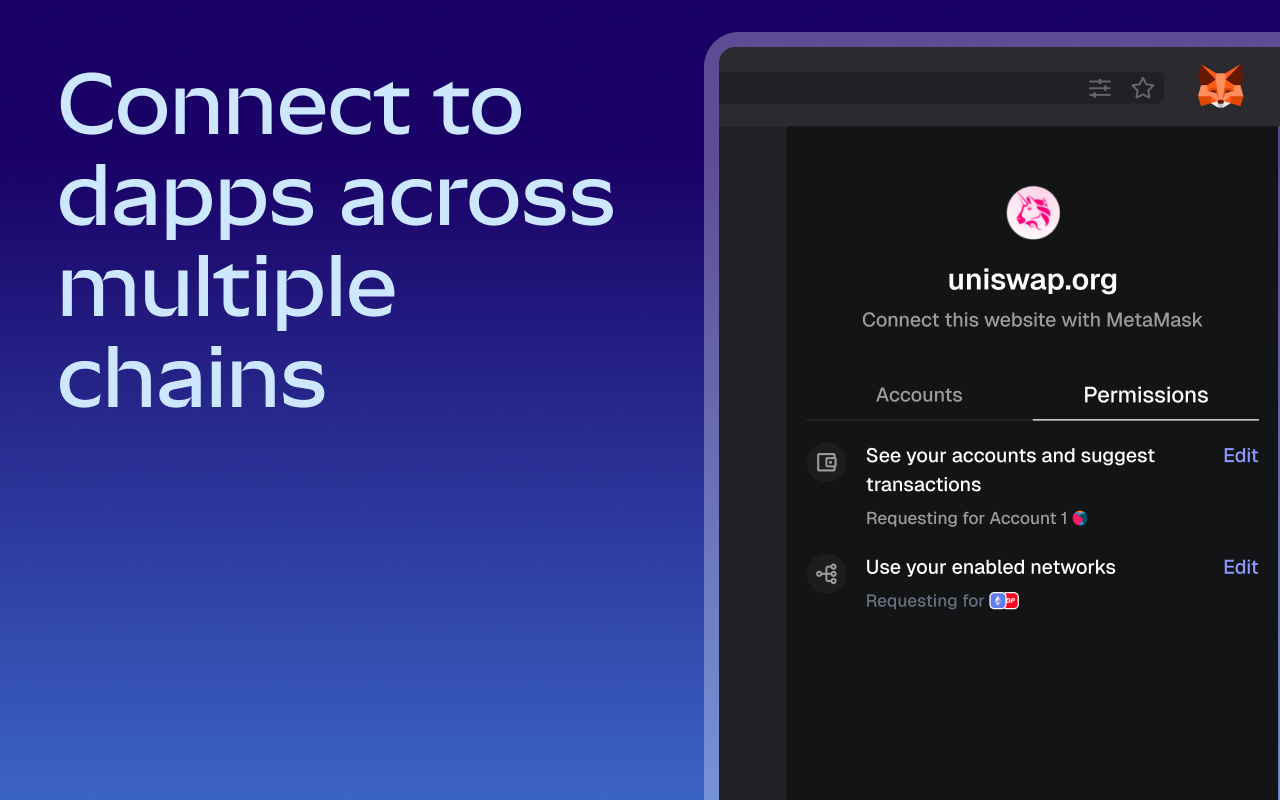
- Treat every "connect wallet," "approve," and "sign" prompt as a decision. Read what you're signing.
- Periodically review and revoke old token approvals.
- Keep a separate "burner" wallet for minting and risky dApps, apart from your main holdings.
Verdict: Is MetaMask safe?
Yes. As a piece of software, MetaMask is mature and heavily audited, its key model has never been broken, and by MetaMask's account, its September 2026 security incident hasn't affected wallets or funds. It's a legitimately safe non-custodial wallet.
But safe software doesn't protect you from a lost password, a misplaced recovery phrase, or a signature you didn't understand. In self-custody, you are the last line of defense, and when something goes wrong, sometimes the only one who can get back in. That's worth taking seriously before you need it, not after.
Already lost access or been scammed?
If you're locked out of a MetaMask wallet you still control, we may be able to help you get back in. Crypto Asset Recovery recovers forgotten passwords on encrypted MetaMask vaults using secure, offline techniques. If your funds were stolen, we can refer you to a partner who handles tracing.
- Locked out by a forgotten password? See how to recover your lost MetaMask password.
- Lost or partial recovery phrase? See the MetaMask recovery phrase guide.
- Not sure where you created the wallet? Start with finding old passwords.
You only pay if we succeed. Completely risk-free.
Why Choose Crypto Asset Recovery to Recover Your MetaMask Wallet?
- Secure, offline recovery. The actual cracking runs on air-gapped, offline machines, so your keys are never exposed online.
- Thousands of wallets recovered across MetaMask, Blockchain.com, Bitcoin Core, and more.
- Success-based pricing. You only pay if we actually get you back in.
- Talk to a real person. Reach out any time, and you can get on a Zoom with our founders, the father-and-son team Chris and Charles.
- Featured in BBC, Forbes, Vice, The Block, and Business Insider.
Frequently asked questions
Is MetaMask legit? Yes. MetaMask is a genuine product from Consensys, first released in 2016, and one of the most widely used crypto wallets in the world. It's non-custodial, audited by outside security firms, and runs a public bug-bounty program.
Can MetaMask be hacked? MetaMask's encryption has never been broken, and MetaMask says it has found no sign that its September 2026 security incident affected wallets or funds. But your wallet can still be compromised if you reveal your recovery phrase, sign a malicious approval, or install malware. Nearly all "MetaMask hacks" are user-side scams, not flaws in the wallet.
Is MetaMask safe to store a lot of crypto? It's safe software, but for large amounts we recommend pairing MetaMask with a hardware wallet (Ledger or Trezor) so your keys stay offline. Also make sure your recovery phrase is backed up somewhere physical and secure, because self-custody has no reset button.
Is MetaMask insured? No. MetaMask is non-custodial, so there's no custodian and no FDIC or private insurance on your funds. You control the keys, which means you also carry the risk. That's the trade-off for full ownership.
What happens if MetaMask (or Consensys) shuts down? Your funds aren't stored by Consensys, so they don't disappear if the company does. As long as you have your Secret Recovery Phrase, you can import your wallet into any other compatible wallet. And even if you've lost the phrase but still have your encrypted vault file, the wallet can often be recovered from that.
I forgot my MetaMask password. Can it be recovered? If you still have your full Secret Recovery Phrase, you can reset the password by re-importing your wallet. If you don't, don't reset, reinstall, or clear MetaMask, because that deletes the encrypted vault. If you still have that vault, Crypto Asset Recovery may be able to recover the password with offline cracking. Reach out and we'll tell you honestly whether your case is workable.


