
Short answer: yes. Phantom is a well-built non-custodial wallet, and in 2026 it's the most popular wallet on Solana, with around 15 million monthly users. Nobody has breached its systems, and the notorious 2022 "Phantom hack" came from a different wallet. As with any self-custody wallet, your real risks are losing your own access and getting phished.
This review covers how Phantom protects your crypto, what happened in 2022, why its Trustpilot score looks alarming, the risks that matter, and what to do if you're locked out or think you've been scammed.
We recover crypto wallets for a living, so we see where people lose money in practice.
What is Phantom?
Phantom is a non-custodial software wallet that launched in 2021. It started on Solana and now also supports Ethereum, Base, Polygon, Bitcoin, and Sui, along with NFTs. It runs as a browser extension and as a mobile app for iOS and Android. Investors valued the company at $3 billion in its early-2025 funding round.
Non-custodial is the part that matters most. Phantom never holds your funds, keys, or recovery phrase. Its security page puts it in one line: "Self-custodial means you control your funds. We never have access." You get full control, and you carry full responsibility.
How Phantom protects your crypto
Your keys are encrypted on your device. Phantom keeps your private key in an encrypted vault on your device, unlocked by your password or biometrics. Your keys never leave the device, so Phantom can't move your funds, recover your wallet, or reset your password.
Biometrics and hardware wallets. The mobile app supports Face ID and fingerprint unlock. On both the extension and mobile, you can pair a Ledger hardware wallet to keep your keys offline. For larger balances, we recommend it.
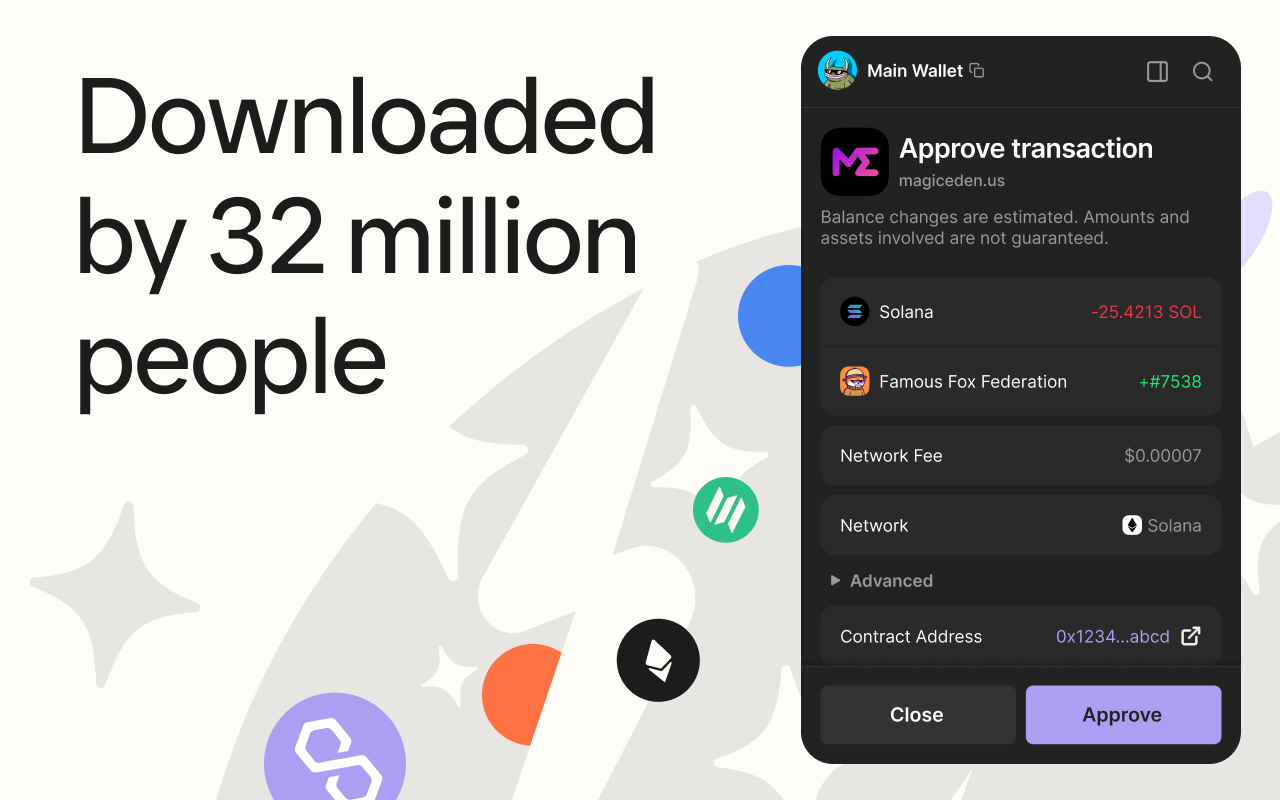
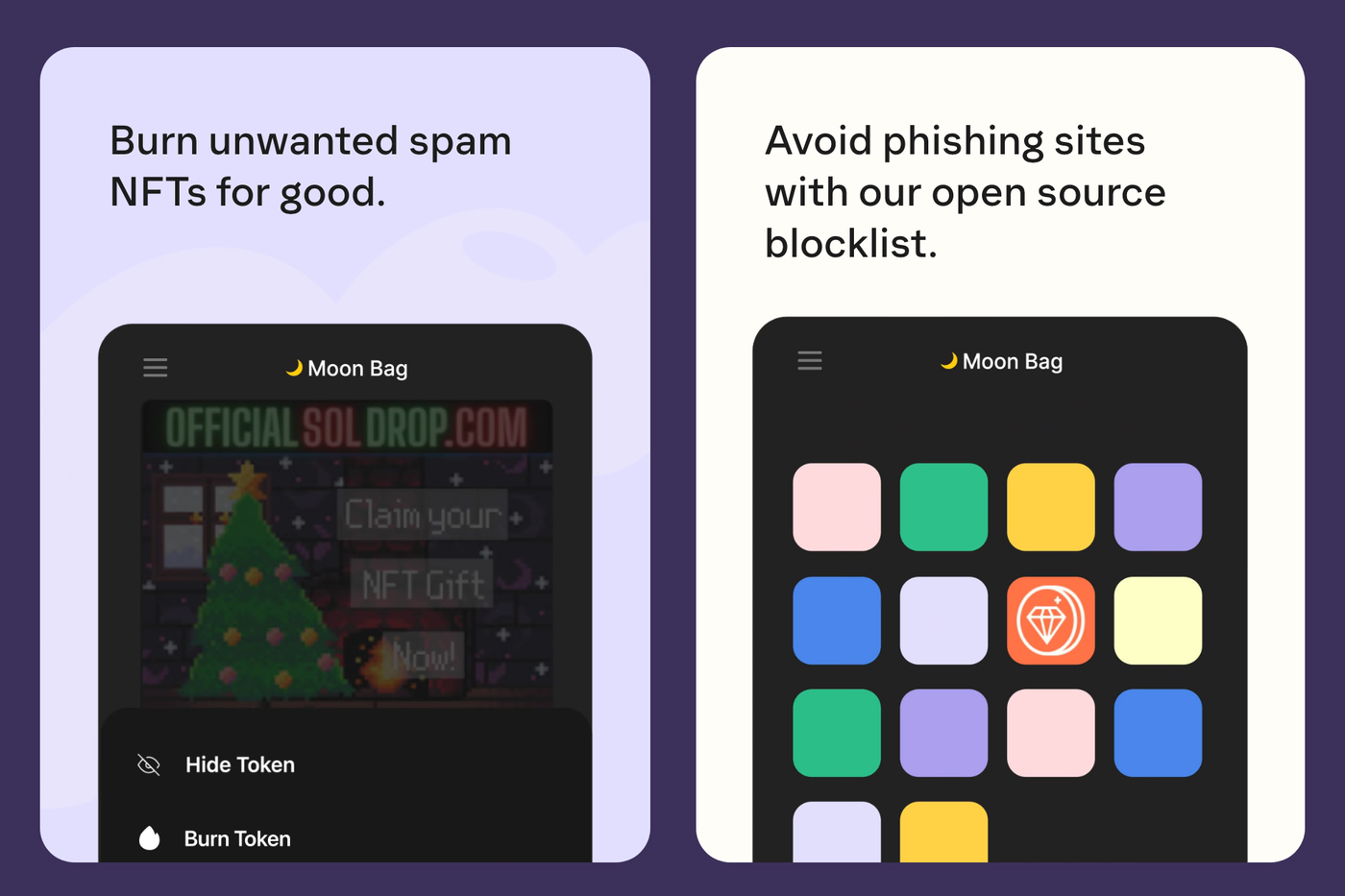
Built-in scam defenses. Phantom previews each transaction and flags malicious ones before you sign, using scam-detection technology from Blowfish, a security firm Phantom acquired in 2024. It also maintains an open-source blocklist of phishing sites, warns you about address poisoning, and lets you burn spam NFTs. Most Phantom losses come from bad signatures, not broken encryption, so these defenses do real work.
Audits and a bug bounty. Kudelski Security and Least Authority have audited Phantom's code, and Phantom publishes their reports in its official audit repository. It also runs a bug bounty that pays up to $50,000, so researchers have a reason to report flaws instead of exploiting them.
One caveat: Phantom's wallet app is closed-source. Only its developer SDKs and phishing blocklist are open. That's common for consumer wallets, but it means you rely on the audits and the company rather than reading the code yourself.
Has Phantom ever been hacked?
Nobody has breached Phantom's own systems. One famous piece of misinformation still circulates, though, so here's what happened.
The 2022 "Phantom hack" came from Slope. In early August 2022, attackers drained thousands of Solana wallets of roughly $4 to $5 million. Early headlines blamed Phantom. The cause turned out to be Slope, a different wallet: its mobile app had been sending users' recovery phrases in plain text to a logging server, where an attacker could read them. Solana's investigation traced the affected wallets back to Slope. Phantom users lost funds only if they had imported a seed phrase originally created in Slope, and Phantom confirmed after its own investigation that its systems weren't compromised.
Two smaller, real items belong on the record:
- The "Demonic" vulnerability (CVE-2022-32969). Under specific conditions, a browser feature could save a typed recovery phrase to disk in plain text. It affected several browser wallets, including Phantom and MetaMask, and an attacker needed local access to your computer to exploit it. Phantom says it had protected all users by April 2022.
- A November 2024 iOS bug. An app update unexpectedly reset some wallets. Users who hadn't backed up their recovery phrase lost access, and Phantom shipped an emergency fix. If your phrase is written down safely, an app reset like this costs you a few minutes.
A 2025 lawsuit also alleges a design weakness in Phantom. The case stems from malware on the victim's own computer, and the claims are unproven. It doesn't show a breach of Phantom.
Why is Phantom's Trustpilot score so low?
If you've searched "is Phantom safe," you've probably seen its Trustpilot rating sitting around 1.5 stars.
People rarely review a self-custody wallet when everything works. They review it after they've lost money, and with self-custody that loss is usually permanent. The reviews cluster around drained wallets, and nearly all of those trace back to something on the user's side: a leaked recovery phrase, a malicious signature, a fake extension. The score tells you how unforgiving self-custody is. It doesn't point to a flaw anyone has found in Phantom's code.
Your biggest risk is losing your own access
People who lose crypto in Phantom almost never lose it to a Phantom hack. They lose it one of two ordinary ways.
The first is losing their own access. They forget the password to a wallet whose recovery phrase they never wrote down, wipe a device, or store the phrase somewhere they can't find. Phantom's password reset requires your recovery phrase, and no email link will get you back in. If both the password and the phrase are gone, the encrypted vault on your device is the last way in.
The second is giving access away to a scammer, which we cover below.
If you're in the first situation and still have the wallet or its encrypted vault, you may have a way back. Crypto Asset Recovery uses secure, offline password cracking to recover access to Phantom vaults when you still have the encrypted file but have lost the password. We work from the vault data and your best password guesses. You only pay if we succeed.
If you've forgotten your password, our guide to recovering a lost Phantom password walks through it. If you've lost part of your recovery phrase, read our post on a missing word in a seed phrase. For background on the wallet, see our history of Phantom Wallet.
Phantom scams to watch for
When someone loses money "on Phantom," a scam is almost always the cause. These come up again and again:
- Fake "update your extension" prompts. A scam site connects to your wallet, then shows a spoofed pop-up asking you to "update," which leads to a request for your recovery phrase. A real Phantom prompt opens as its own window. A phishing prompt stays trapped inside the browser tab.
- Fake airdrops and spam NFTs. Tokens or NFTs you never asked for show up in your wallet as bait, and interacting with them sends you to a phishing page or an approval trap. Ignore them, and use Phantom's burn feature to clear spam.
- Malicious approvals and drainer sites. A "claim" or "connect" page gets you to sign a transaction that hands an attacker control of your assets. Read every signature request.
- Address poisoning. An attacker sends a tiny transaction from a lookalike address, hoping you'll copy the wrong address from your history later. Phantom warns about this, but check addresses carefully.
- Fake support and counterfeit extensions. Impersonators pose as Phantom support and ask for your phrase, and fake extensions steal it the moment you type it. Phantom staff never DM you first or ask for your recovery phrase.
If someone has already stolen your crypto, password recovery can't bring it back, because the funds have left your control. Crypto Asset Recovery handles password and recovery-phrase recovery, not fund tracing. If you've been robbed, save the transaction hashes, wallet addresses and screenshots of every conversation, and report the theft to the FBI's Internet Crime Complaint Center at ic3.gov, or to your local police outside the US. If the funds went to an Ethereum address, our free scam checker can look up that address or the transaction hash in public scam reports and show its recent transfers. It isn't a full trace, and finding no reports doesn't mean an address is safe. Don't trust anyone who guarantees they can get stolen crypto back.
Best practices to stay safe on Phantom
- Write your recovery phrase on paper or steel and store it offline. Never photograph it, keep it in cloud notes, or type it into a website.
- Install Phantom only from official stores, and bookmark phantom.com.
- Use a hardware wallet for any balance you'd hate to lose.
- Treat every "connect," "approve," and "sign" prompt as a decision, and read it.
- Ignore tokens and airdrops you didn't ask for.
- Keep a separate wallet for risky mints and dApps, away from your main holdings.
Verdict: Is Phantom safe?
Yes. Phantom is a mature, audited, non-custodial wallet, nobody has breached its systems, and the notorious 2022 hack came from Slope. As software, it's a safe choice, and its built-in scam warnings help.
The remaining risk is the one every self-custody wallet shares: you're your own bank. A lost recovery phrase or a signature you didn't understand can cost you everything, and no amount of good engineering changes that. Set up your backups before you need them.
Already lost access or been scammed?
If you're locked out of a Phantom wallet you still control, we may be able to help. Crypto Asset Recovery recovers forgotten passwords on encrypted Phantom vaults using secure, offline techniques. If your funds were stolen, we can't trace or recover them. Report the theft at ic3.gov, and don't trust anyone who guarantees they can get it back.
- Locked out by a forgotten password? See how to recover your lost Phantom password.
- Missing part of your recovery phrase? See our guide to a missing word in a seed phrase.
- Not sure where to start? Read how to find old passwords.
You only pay if we succeed. Completely risk-free.
Why Choose Crypto Asset Recovery to Recover Your Phantom Wallet?
- Secure, offline recovery. The cracking runs on air-gapped, offline machines, so your keys are never exposed online.
- Thousands of wallets recovered across Phantom, MetaMask, Trust Wallet, Blockchain.com, and more.
- Success-based pricing. You only pay if we get you back in.
- Talk to a real person. Reach out any time, and you can get on a Zoom with our founders, the father-and-son team Chris and Charles.
- Featured in BBC, Forbes, Vice, The Block, and Business Insider.
Frequently asked questions
Is Phantom wallet legit? Yes. Phantom is a genuine non-custodial wallet that launched in 2021. It's the most popular wallet on Solana, with roughly 15 million monthly users and a multi-billion-dollar valuation. Outside firms have audited it, and it runs a public bug bounty.
Can Phantom wallet be hacked? Nobody has breached Phantom's own systems, and the 2022 Solana drain that people blamed on Phantom came from a different wallet, Slope. Your own wallet can still be emptied if you reveal your recovery phrase, connect to a fake DeFi site, or sign a malicious transaction. Nearly all real losses come from user-side scams like these.
Why does Phantom have such bad reviews? People who review self-custody wallets are mostly people who've lost money. Those losses are usually permanent and caused by phishing or leaked recovery phrases, not by a flaw in Phantom. The low Trustpilot score reflects how unforgiving self-custody is.
Is Phantom safe for storing a lot of crypto? The software is safe, but for large amounts we recommend pairing Phantom with a Ledger hardware wallet so your keys stay offline, and backing up your recovery phrase somewhere physical and secure. Self-custody has no reset button.
Is Phantom insured? No. Phantom is non-custodial, so no custodian holds your funds and no FDIC or private insurance covers them. You hold the keys, so you also carry the risk.
I forgot my Phantom password. Can it be recovered? If you still have your recovery phrase, reset the password by re-importing your wallet. If you've also lost the phrase but still have the encrypted vault, Crypto Asset Recovery may be able to recover the password with offline cracking. Reach out, and we'll tell you whether your case is workable.


