
Short answer: yes, Blockchain.com is a legitimate, long-running, regulated company, one of the oldest names in crypto, with more than 95 million wallets created since 2011. Its non-custodial wallet is safe, and there's no documented breach of its modern custody systems. But the brand covers two very different products with very different risks, and a lot of the scary reviews you'll find are about account lockouts on the custodial side, not about your crypto being stolen. The biggest everyday risk is losing your own access.
That's the honest take. We separate the wallet from the exchange, walk through the security and the history, tackle the "is it a scam?" reviews head-on, and explain what to do if you're locked out.
We recover crypto wallets for a living, and Blockchain.com is one of the wallets we work with most, so we know exactly where people get stuck.
The most important thing to understand: two very different products
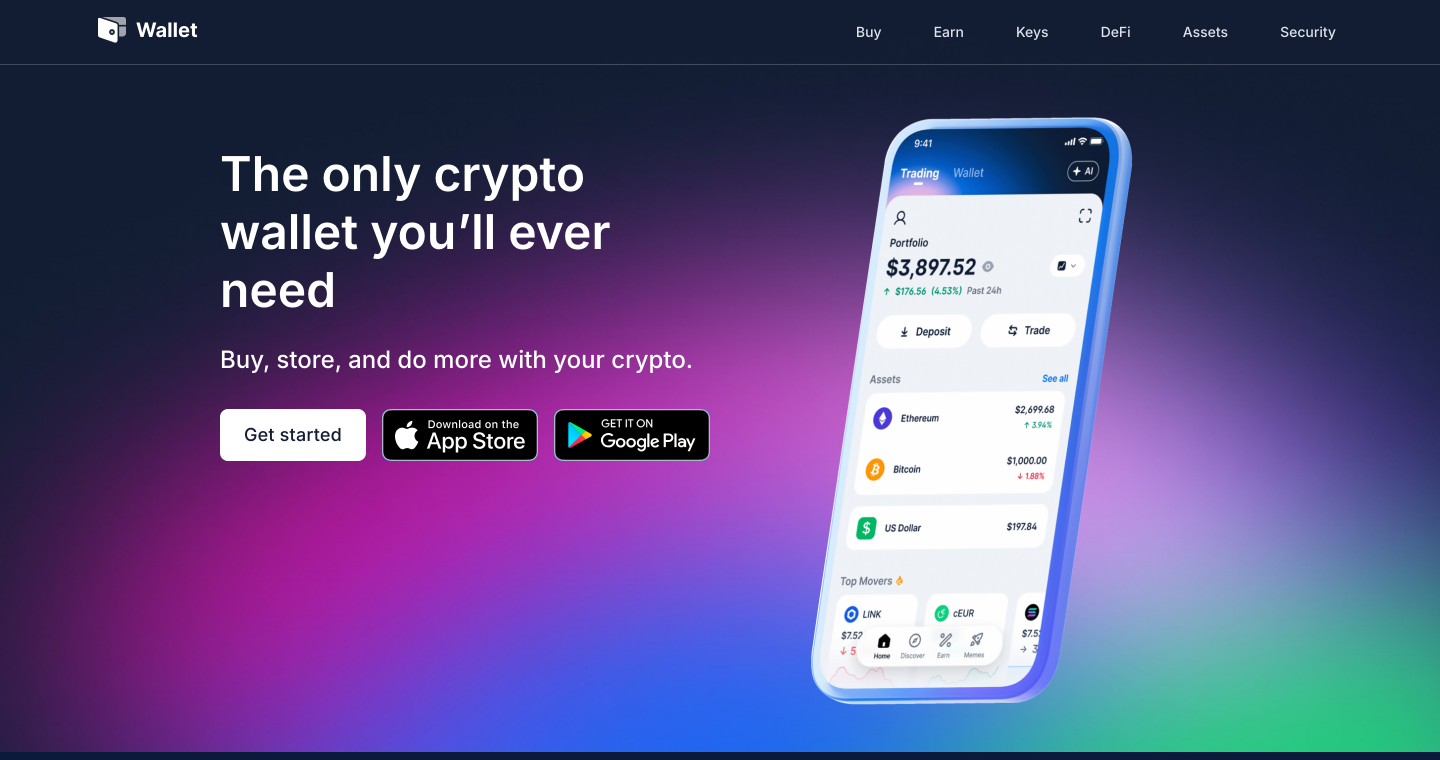
First, know which Blockchain.com product you're using, because the two have opposite risk profiles.
- The Wallet (also called the DeFi Wallet or Private Key Wallet) is non-custodial. You control the keys, backed by a 12-word recovery phrase. Blockchain.com never has access to it and can't move your funds. This is the one most crypto holders mean.
- The Trading Account (or Blockchain.com Account) is custodial. Blockchain.com holds the keys for you, like an exchange. You log in with an email and password, and the company can reset that password and recover your account.
Almost every point below depends on which of these you have. Mixing them up is the single most common source of confusion, and of bad decisions when something goes wrong.
How Blockchain.com protects your crypto

The non-custodial Wallet. Your 12-word recovery phrase controls your keys. Blockchain.com stores your wallet as an AES-256-encrypted payload that only your password can unlock. The company doesn't store your password and can't decrypt your wallet, which is why it can't reset a forgotten wallet password. That's a security feature, not a bug. It's also the thing that traps people, as we'll explain.
The custodial side. For funds held in the custodial business, Blockchain.com publishes serious institutional controls: roughly 95% of custodial assets in offline cold storage, multisig, and keys inside FIPS 140-2 hardware security modules. Important caveat: these protections apply to custodial funds. They do not extend to your non-custodial Wallet, and they are not insurance.
Account security tools. Blockchain.com supports two-factor authentication via an authenticator app or a YubiKey (it recommends these over SMS because of SIM-swap risk), plus PIN and biometric unlock on mobile.
Compliance and regulation. Blockchain.com holds ISO 27001, SOC 2 (assessed annually by A-LIGN), and CCSS Level 3 certifications. Blockchain.com, Inc. is a FinCEN-registered money services business with US state licenses, and its Cayman entity is a registered VASP. This is a regulated, audited operation, not a fly-by-night app.
It is not FDIC- or SIPC-insured. Blockchain.com's own terms state its products aren't covered by any deposit-insurance or investor-compensation scheme. In crypto that's normal, but it's worth knowing.
Has Blockchain.com ever been hacked?
The honest answer: there's no documented breach of Blockchain.com's modern custody systems or its DeFi Wallet. The incidents on its record are old, and almost all trace to a specific class of early bug: weak random-number generation in 2013–2015-era software, an industry-wide problem back then, not a break-in.
For completeness:
- December 2014: a flawed software update at the old Blockchain.info generated weak keys during a roughly two-and-a-half-hour window. Blockchain.com said it affected a tiny fraction of users, and a white-hat researcher swept and returned the vulnerable coins.
- 2013 and 2015: two separate weak-randomness bugs (one an industry-wide Android flaw, one specific to Blockchain's early Android app) affected a small number of users on old devices.
- "Randstorm" (disclosed 2023): researchers flagged that a widely used JavaScript library could have produced weak keys in 2011–2015-era browsers, which includes some very old Blockchain.info wallets. It's a reason to move funds out of ancient wallets, not evidence of a current breach.
There's also a business event people confuse for a hack: in July 2022, Blockchain.com disclosed around $270 million of exposure to loans made to the failed hedge fund Three Arrows Capital. That was a financial loss for the company, not a compromise of user funds, and the company said customers wouldn't be impacted.
No Blockchain.com-specific security vulnerability (CVE) is well-documented for the modern product. Bottom line: the wallet's crypto has held up.
"Blockchain.com is a scam": what those reviews are really about
Search "is Blockchain.com safe" and you'll hit angry reviews and even a Reddit thread calling it a scam. It's worth being straight about what's driving that, because it's real frustration, just not usually a security failure.
The complaints cluster around the custodial side: accounts frozen or restricted for compliance and KYC reasons, verification that drags on for weeks, withdrawals held up, and slow support. Those are genuine, maddening experiences, and they're why the Trustpilot score is low. But they're about account access and customer service, not about the wallet's encryption being broken or funds being stolen from the blockchain. Long-term holders who never trip a compliance flag tend to be fine. Weigh the reviews for what they describe.
The biggest risk isn't a hack. It's losing your own access
It's specific to Blockchain.com in one painful way.
With the non-custodial Wallet, if you forget your password, Blockchain.com cannot reset it for you. And the trap: clicking "reset password" on the wallet doesn't recover your old wallet. It creates a brand-new, empty one with a new recovery phrase. People do this in a panic and think their coins are gone, when in fact the old wallet still exists and is reachable through its original recovery phrase, or its original Wallet ID plus password. If you take one thing from this article, take that.
So the two ways people lose Blockchain.com crypto are:
- Losing their own access: forgetting the wallet password with no saved recovery phrase, or losing the phrase entirely.
- Getting phished into handing over the phrase, password, or Wallet ID.
If you're locked out of a non-custodial Blockchain.com Wallet and you don't have the recovery phrase, you're not necessarily out of options. Your encrypted wallet is automatically backed up on Blockchain.com's servers, and with your authorization, we can retrieve it and work on it offline. Crypto Asset Recovery specializes in exactly this: recovering forgotten passwords on Blockchain.com wallets using secure, offline techniques, including older wallets and double-encrypted "second password" cases. You only pay if we succeed.
A few specifics matter here: whether your wallet is modern or a legacy Blockchain.info one, whether a second password is enabled, whether you still have your Wallet ID. The honest first step is to tell us what you've got. For older wallets, see our guides on recovering a lost Blockchain.com password, the Blockchain.info second password, and legacy Blockchain mnemonics.
(If you've forgotten the password to the custodial Trading Account, that's different. Use Blockchain.com's own account-reset and ID re-verification flow. That's an account reset, not something we crack.)
Blockchain.com scams to watch for
Blockchain.com's large, long-standing user base makes it a favorite phishing target. The recurring patterns:
- "Verify your wallet / device / email" phishing. Emails and texts push you to a fake login page to "verify," which harvests your phrase, password, or Wallet ID. Blockchain.com never cold-contacts you asking for these.
- "Compensation payment" and "money transfer" scams. Emails claim you're owed a payout, leading to a phishing site or an advance-fee trap.
- Typosquatted login pages. Lookalike domains (a letter off from the real one) mimic the login screen. Always check the URL and use a bookmark.
- Fake support and "fund recovery" services. Impersonators offer to "unlock" your funds for a fee. Blockchain.com offers no fund-recovery service and will never DM you first.
Never share your recovery phrase, private key, password, or Wallet ID with anyone. If your crypto has already been stolen, password recovery can't bring it back; the funds have left your control. Crypto Asset Recovery handles password and recovery-phrase recovery, not fund tracing, but if you've been robbed we can refer you to a partner who investigates theft.
Best practices to stay safe on Blockchain.com
- Know which product you have. Non-custodial Wallet and custodial Account are not the same.
- Write your 12-word recovery phrase on paper (or steel) and store it offline. Never type it into a website.
- Never click "reset password" on a non-custodial wallet expecting to recover it. Restore from your phrase instead.
- Turn on authenticator-app or YubiKey 2FA, not SMS.
- Only log in from a bookmarked, verified URL. Check for phishing lookalikes.
- Keep large balances in a hardware wallet where possible.
Verdict: Is Blockchain.com safe?
Yes. Blockchain.com is a legitimate, regulated, long-established company, its non-custodial Wallet is safe, and there's no documented breach of its modern custody. The negative reviews are real but mostly reflect custodial account-access frustrations, not stolen crypto.
The risk that should concern you is the ordinary self-custody one, sharpened by a Blockchain.com-specific trap: forget your wallet password, hit "reset," and you can lock yourself out of your own coins if you don't understand that a reset makes a new wallet. Back up your recovery phrase, keep it offline, and know the difference between resetting and restoring.
Already lost access or been scammed?
If you're locked out of a non-custodial Blockchain.com Wallet, we may be able to help you get back in. Crypto Asset Recovery recovers forgotten Blockchain.com wallet passwords, including legacy and double-encrypted wallets, using secure, offline techniques. If your funds were stolen, we can refer you to a partner who handles tracing.
- Forgotten wallet password? Start with recovering a lost Blockchain.com password.
- Double-encrypted wallet? See the second password guide.
- Old Blockchain.info wallet? See legacy Blockchain mnemonics.
You only pay if we succeed. Completely risk-free.
Why Choose Crypto Asset Recovery to Recover Your Blockchain.com Wallet?
- Secure, offline recovery. The actual cracking runs on air-gapped, offline machines, so your keys are never exposed online.
- Deep Blockchain.com experience, including legacy Blockchain.info wallets and double-encrypted "second password" cases.
- Success-based pricing. You only pay if we actually get you back in.
- Talk to a real person. Reach out any time, and you can get on a Zoom with our founders, the father-and-son team Chris and Charles.
- Featured in BBC, Forbes, Vice, The Block, and Business Insider.
Frequently asked questions
Is Blockchain.com legit? Yes. Blockchain.com is one of the oldest companies in crypto, operating since 2011, with more than 95 million wallets created. It's a regulated money services business with US state licenses and a registered VASP entity, and it holds ISO 27001 and SOC 2 certifications.
Is Blockchain.com a scam? No. It's a legitimate, regulated company. The "scam" reviews you'll find are overwhelmingly about custodial account lockouts, KYC delays, and slow support, not about stolen crypto or a security breach. Separate real security questions from customer-service frustration.
Has Blockchain.com ever been hacked? There's no documented breach of its modern custody or its non-custodial Wallet. The incidents on record are old weak-random-number bugs from the 2013–2015 era that affected a small number of users, plus a 2022 business loss (loans to Three Arrows Capital) that wasn't a hack of user funds.
Is my Blockchain.com wallet insured? No. Blockchain.com's terms state its products aren't covered by FDIC, SIPC, or any deposit-insurance or investor-compensation scheme. Your non-custodial Wallet is secured by your own keys, not by insurance.
I forgot my Blockchain.com password. Can it be recovered? It depends which product you have. For the custodial Trading Account, use Blockchain.com's account-reset flow. For the non-custodial Wallet, Blockchain.com cannot reset it — and clicking "reset" creates a new, empty wallet. If you've lost the password and the recovery phrase, Crypto Asset Recovery may be able to recover the wallet password with offline cracking. Contact us and we'll tell you honestly whether your case is workable.


