What Happened to StrongCoin.com?
StrongCoin.com is a cryptocurrency service that called itself "The only Bitcoin e-wallet service that's not vulnerable to security breaches." The site promised, "No more lost or stolen wallet.dat [files]." (A wallet.dat file is the wallet backup for Bitcoin Core / Bitcoin-Qt wallets).
We took some time to find out the history of the site, the services it provides, and some of the controversies connected with it.
Do you need to recover funds from a Strongcoin Paper Wallet Backup?
We have written an article to help you do that, here. If you have your paper backup, your funds are recoverable regardless of whether StrongCoin's service is functional.
The History of StrongCoin.com (and its sister site, Bitcoinary.com)
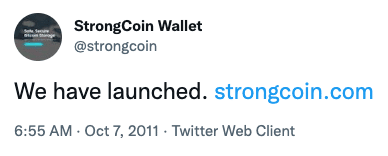
StrongCoin.com was established in London in 2011 by Ian Purton. The launch was announced on Twitter:
Purton describes himself as a programmer who started coding at the age of 13. He also claims that he started building websites at the age of 16.
According to Bitcoin Magazine, "StrongCoin is what is often called a hybrid web wallet, accessible as a website on the internet but doing all of the transaction signing and address management in JavaScript on the client-side."
According to Cryptolinks.com, StrongCoin was hosted by Heroku servers, which also carried out regular security audits. The service worked across devices, including mobile, tablets, and desktops.
A 2013 article written by Danny Bradbury and published by CoinDesk.com reports that Purton also ran an OTC (Over-The-Counter) exchange known as Bitcoinary.com. Bradbury explains how an OTC differs from traditional exchanges like BitStamp and MT. Gox: "it doesn't require you to hold funds in an account or process trades for you."
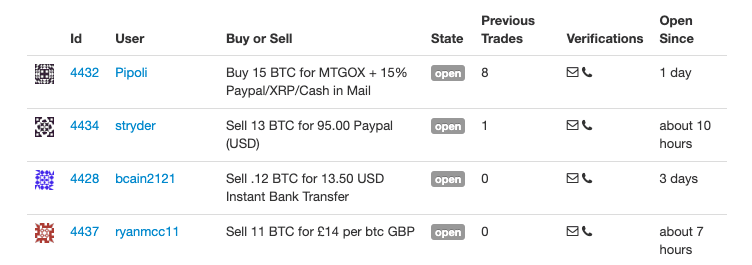
In an OTC exchange, participants trade directly with each other. For example, someone wanting to sell Bitcoin could advertise the number of Bitcoin that they wanted to sell, the price they wanted in USD (or other currency), and then the fiat exchange methods they would accept (Paypal, bank transfer, cash-in-mail, etc). Buyers could read the seller's history of transactions, and then decide whether to accept the sale.
Here are a few examples from 2012:
In April, 2026, StrongCoin announced that it was shutting down.
How Does StrongCoin Work?
StrongCoin.com explains its service, "A hybrid wallet allows you to send and receive Bitcoins just like any other wallet." It adds, "However, the Bitcoin private key which is required to send money is encrypted in your browser before it reaches our servers."
Because the password would be encrypted before it was stored in the servers at StongCoin.com, a user's online wallet is known as a hybrid wallet.
StrongCoin assured its users, "neither we nor anyone else can spend your Bitcoins."
A review published by cryptolinks.com explains that since the encryption process happens in the user's device, anyone unlucky enough to forget their password would lose access to their funds.
StrongCoin users could download a PDF backup and/or print a paper backup of their private keys, which would allow them to import those keys into another wallet.
If you used StrongCoin.com and you're nervous that your funds are lost -- as long as you have that backup securely stored, your funds should be fine.
Creating a Coinbase for the Rest of the World
Bradbury reports about a promise made by StrongCoin in 2013 to create "a Coinbase for the rest of the world." The service was intended to be a distributed exchange.
According to Bradbury, the service was designed to be part of the StrongCoin encrypted online wallet service. It would connect holders of Bitcoin with those wanting to purchase.
Bradbury explains, "The difference between this service and Bitcoinary is that users won't have to manually browse through messages from people offering to trade Bitcoins." This is because the service would match the buyers and sellers automatically.
The distributed exchange facilitated trading by allowing suppliers of Bitcoin to register and create a deposit with the site. Users also indicated the mark-up fee they wanted in addition to the base market rate, which was determined by BitStamp. StrongCoin.com would then select the best quote available for the person wanting to buy Bitcoins.
This distributed exchange never fully materialized, and StrongCoin's development appears to have stalled by 2017.
StrongCoin Helps Return Stolen Funds
If StrongCoin promised that it was "The only Bitcoin e-wallet service that's not vulnerable to security breaches," the service would later live up to this claim.
In April 2013, Vitalik Buterin reported in BitcoinMagazine.com that StrongCoin helped return funds stolen from a Bitcoin mining pool call OzCoin.
He reports, "OzCoin... has reported that an unknown attacker managed to hack into their server, defacing their website and database and stealing 923 BTC from their Bitcoin wallet. However, in less than a day over half of the money was seized as it was passing through the web wallet StrongCoin, and promptly returned to Ozcoin."
(Editorial note: Readers may or may not be familiar with the fact that Vitalik Buterin started his career in crypto as a freelance writer. In 2014 he founded a little-known project called Ethereum).
At the time when 923 Bitcoin were stolen, they had a value of USD $135,000. (At today's prices, they would be worth tens of millions of dollars).
Buterin reported that only part of the money was recovered and "354.06 BTC ... will likely never be found, but this nevertheless leaves OzCoin with a much softer blow than what anyone expected."
It's worth noting that this incident raised questions in the community about StrongCoin's claims that "neither we nor anyone else can spend your Bitcoins" -- if they could freeze and return stolen funds, they clearly had some level of access to user wallets.
Reviews and User Complaints
An article published by Cryptolinks.com claims that some problems were identified by the online cryptocurrency community concerning the StrongCoin wallet. However, the site doesn't specify what those problems were.
The same source reports that even though StrongCoin had a long history, it was not popular among users. According to the same article, "There are competitor wallets on the market with more features and a larger online presence."
The Cryptolinks.com article presents StrongCoin's main advantages:
- Long history in the Industry.
- More than 130,000 users.
- Data is encrypted on the user's browser and can only be unlocked with a password supplied by the user.
- StrongCoin could be accessed on different kinds of devices.
Cryptolinks.com also noted some disadvantages:
- The service only supported Bitcoin (although it eventually added Bitcoin Cash after the latter's 2017 debut)
- It did not support fiat currencies.
- All outgoing transactions were subject to a 1% fee.
Recovering Your StrongCoin Funds
If you have funds in a StrongCoin wallet, here are your options:
If you have your password and can log in: Transfer your funds out immediately to a wallet you control (like Electrum or a hardware wallet). Do not leave funds on StrongCoin.
If you have a paper wallet backup: Your private keys are encrypted with AES-256-CBC. You can decrypt them using OpenSSL and import them into Electrum. We have a detailed guide here.
If you forgot your password: Since StrongCoin encrypted your private keys with your password before storing them, you'll need to recover (or guess) your password to access your funds. This is a service we provide.
Don't forget Bitcoin Cash: If you had Bitcoin in StrongCoin before August 1, 2017, your private keys also control an equal amount of Bitcoin Cash from the fork. Many users have reported that StrongCoin's BCH handling was problematic -- recovering your private keys directly gives you full control.
Need Help?
If you have a StrongCoin paper backup but can't remember your password, or if you're having trouble with the technical recovery process, contact us. We specialize in recovering funds from legacy wallets like StrongCoin, and we only charge a fee if we're successful.
Ready to get your crypto back?
If guessing hasn't worked, we can help. Free assessment, no upfront cost — if we recover nothing, you pay nothing.
Start a free consultation →